

Introduction
Purchasing land is one of the most significant financial decisions an individual can make. Whether you intend to build a home, establish a business, develop an estate, or secure land for future investment, proper due diligence is essential.
Unfortunately, many land buyers in Delta State and across Nigeria have suffered financial losses due to inadequate verification, fraudulent transactions, family disputes, government acquisition issues, and poor documentation.
The good news is that most of these challenges can be avoided by conducting the right checks before committing your money.
This article outlines seven essential checks every buyer should make before purchasing land in Delta State to ensure a secure and profitable investment.
1. Verify the Survey Plan
A survey plan is one of the first documents that should be examined before purchasing any land.
The survey plan provides critical information about the property’s:
- Exact location
- Boundaries and dimensions
- Coordinates
- Physical layout
More importantly, the survey plan can help determine whether the land falls under government acquisition or is affected by any existing development restrictions.
A licensed surveyor can assist in verifying the authenticity of the survey plan and confirming that it corresponds with the actual land being offered for sale.
Skipping this step could result in purchasing land that cannot legally be developed.
2. Confirm Ownership and Seller Authority
Before making any payment, ensure that the person or organization selling the land has the legal authority to do so.
Ask important questions such as:
- Who owns the land?
- How was ownership acquired?
- Are there co-owners involved?
- Is family or community consent required?
- Is there any dispute regarding ownership?
In Delta State, many land transactions involve family-owned or communal land. Buyers should ensure that all necessary stakeholders have given proper consent to avoid future disputes.
Proper ownership verification protects your investment and minimizes legal complications.
3. Verify the Title Documents
Land documentation remains one of the most important aspects of any property transaction.
Common documents to verify include:
- Certificate of Occupancy (C of O)
- Deed of Assignment
- Registered Survey Plan
- Governor’s Consent
- Registered Conveyance
- Allocation Documents
A thorough review of title documents helps confirm that the land has a valid legal foundation and can be transferred to a new owner.
Professional verification should always be conducted before payment is made.
4. Check for Government Acquisition or Encumbrances
One of the most common mistakes land buyers make is failing to determine whether land has been acquired by the government.
Government-acquired land may be reserved for:
- Road construction
- Public infrastructure
- Educational institutions
- Utility projects
- Future development programs
Properties under acquisition may eventually be reclaimed or affected by government projects.
A search through the appropriate authorities and land administration offices can reveal whether the land is free from acquisition or other legal encumbrances.
This simple step can save buyers from devastating financial losses.
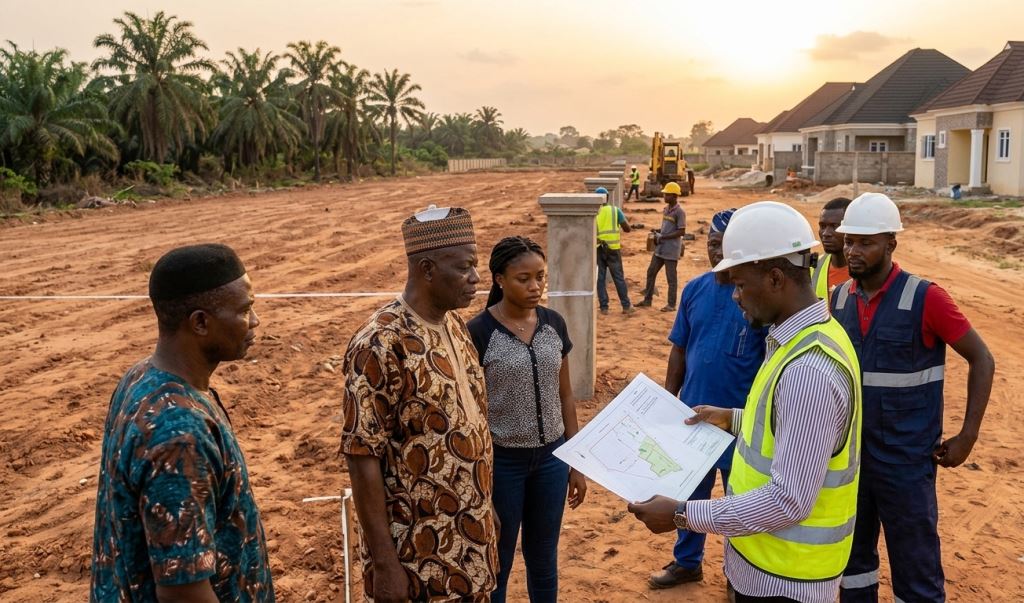
5. Conduct a Physical Site Inspection
No matter how convincing a seller may appear, physical inspection should never be overlooked.
A site visit allows buyers to:
- Verify the location
- Confirm accessibility
- Assess surrounding developments
- Identify environmental concerns
- Check for existing occupants
- Evaluate future growth potential
Physical inspections often reveal issues that may not be apparent from documents alone.
In many cases, a visit to the site can provide valuable insights into whether the property aligns with your investment objectives.
6. Investigate the Surrounding Environment
The value of land is heavily influenced by its surrounding environment.
Before purchasing, assess factors such as:
- Road accessibility
- Security
- Drainage conditions
- Existing infrastructure
- Nearby residential developments
- Commercial activities
- Future government projects
Areas experiencing rapid development often offer stronger appreciation potential.
Investors should also consider how future developments may impact property values over time.
Locations near growing estates such as Love Estate, Paradise Ridge, Prestige Valley, Heritage Park Estate, and Green Wood Estate may present attractive opportunities for long-term growth.
7. Verify Records with the Ministry of Lands and Surveys
One of the most important steps in Delta State land transactions is verifying records through the appropriate government authorities.
The Ministry of Lands and Surveys plays a critical role in maintaining land records and processing land-related documentation.
Verification helps determine:
- Ownership status
- Registration records
- Existing claims
- Land use restrictions
- Encumbrances affecting the property
This process provides additional assurance that the property is legitimate and suitable for purchase.
While it may require additional time and effort, this step significantly reduces investment risk.
Why Professional Due Diligence Matters
Land acquisition involves more than simply exchanging money for property.
Professional due diligence helps buyers:
- Verify ownership
- Confirm documentation
- Identify hidden risks
- Protect investments
- Avoid legal disputes
- Make informed decisions
Working with experienced real estate professionals ensures that all necessary checks are conducted before a transaction is finalized.
At CPOT Properties Nig Ltd and Pantracy Real Estate Agency, comprehensive due diligence forms a key part of our commitment to helping clients invest safely and confidently.
Common Mistakes Buyers Should Avoid
Many buyers make costly errors by:
- Purchasing based solely on verbal promises
- Skipping document verification
- Ignoring site inspections
- Failing to conduct government searches
- Rushing transactions due to attractive pricing
- Relying on unverified agents
Avoiding these mistakes can significantly improve the success of your property investment.
Conclusion
Buying land in Delta State can be one of the smartest financial decisions you make, but only when proper due diligence is conducted.
By verifying survey plans, confirming ownership, reviewing title documents, checking government acquisition status, conducting site inspections, assessing the surrounding environment, and verifying records through the appropriate authorities, buyers can greatly reduce risk and protect their investments.
A careful approach today can save years of legal disputes, financial losses, and unnecessary stress.
Successful real estate investments always begin with informed decisions.
Need Professional Assistance?
CPOT Properties Nig Ltd and Pantracy Real Estate Agency provide expert support for land verification, title checks, due diligence, land acquisition, and investment advisory services.
Contact our team today and invest in Delta State real estate with confidence.